
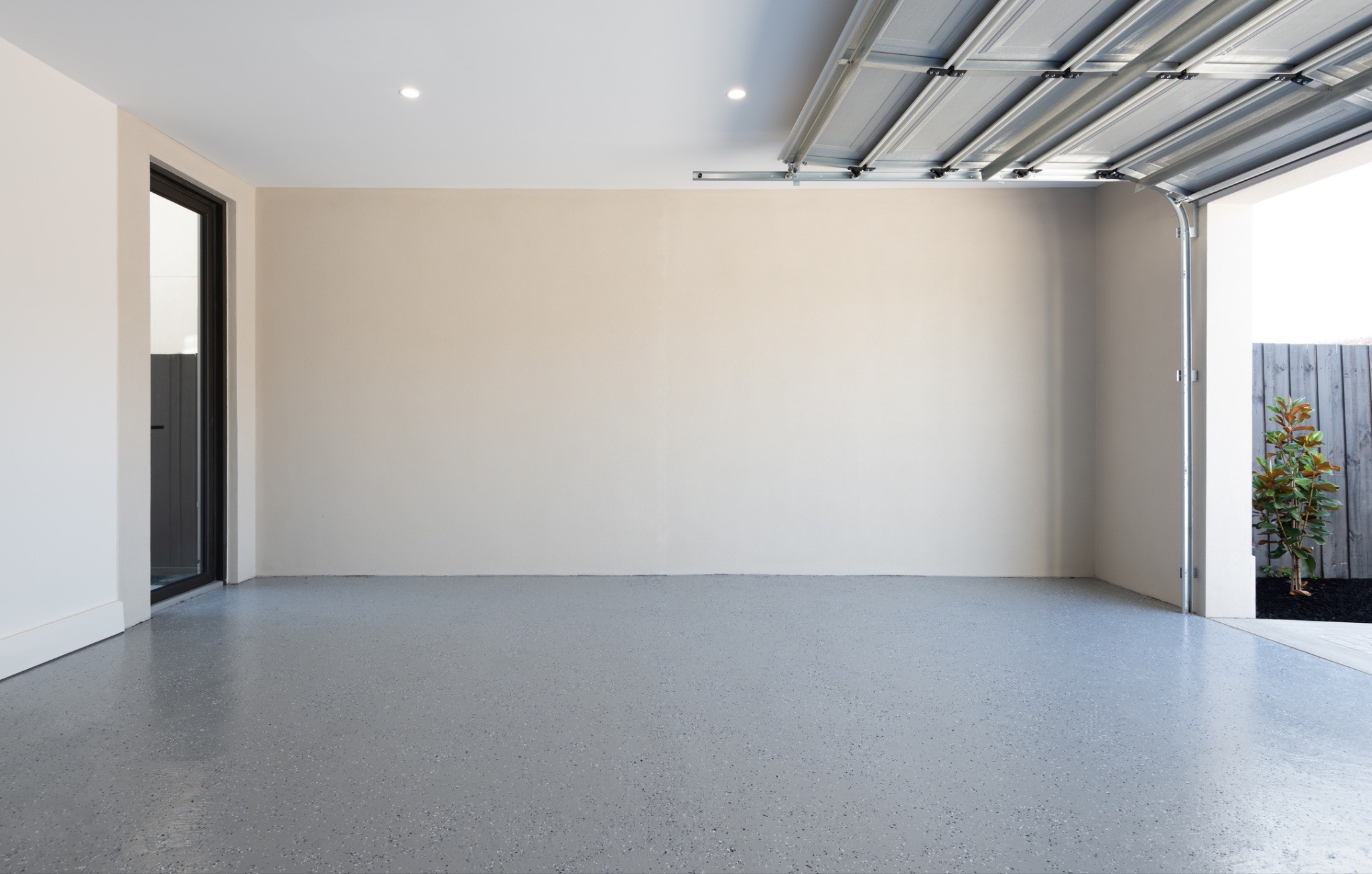
Source: iStockPhoto
In the past, homeowners didn’t give much thought to their garage floors. The surface was just plain gray concrete, and over time, it would end up with cracks, stains, and other problems.
Now, garages are another space in the home that people take pride in upgrading, maintaining, and decorating to suit their needs and aesthetic. Whether the priority is durability, stain and impact resistance, or complementing the look of the garage, there are many reasons to give your garage floor some attention.
Take a look at some garage flooring ideas, the pros and cons of different types of garage flooring, and considerations to find the best fit for your needs.
“Your garage flooring material is an important aspect of your garage’s functionality, durability, and overall maintenance.”
Why Garage Flooring Material Matters
Your garage flooring material is an important aspect of your garage’s functionality, durability, and overall maintenance. Garages often endure heavy traffic from your vehicles, leading to excess wear and tear. Durable materials are built to withstand the weight and movement of vehicles without cracking or breaking.
Many people use their garage for work that may involve oils, lubricants, and other chemicals that can be corrosive. Coatings that are resistant to these substances keep the floor from getting stains or damage to the underlying concrete. Garage floors should also be easy to clean and maintain.
6 Types of Garage Flooring to Consider
There are many types of garage flooring to consider, including:
1. Epoxy Coating
Epoxy coating is a reliable choice for a durable finish that’s easy to clean and maintain. These coatings are made of resin and can handle heavy-duty stress and give your garage a bold look with a seamless finish. Epoxy coatings come in various colors and patterns.
2. Interlocking Tiles
Interlocking tiles are easy to install yourself and offer versatility for your garage floor. You can create custom designs easily and make changes as needed. Tiles come in PVC, polypropylene, rubber, and other materials, though not all of them can withstand the heavy load of a vehicle. Tiles also offer cushioning and thermal insulation for your garage floor.
3. Garage Rolls
Garage rolls are a cost-effective and convenient option for your floors that can cover large areas with few seams. They’re ideal for high-traffic garages and offer protection against impact, scratches, stains, and spills. Though they look nice, rolls have fewer design choices than other options.
4. Rubber Flooring
Rubber garage flooring is often used in garages that double as a home gym, but that’s not its only use. Rubber flooring is durable, resistant to wear and tear, and easy to clean. It doesn’t stain easily and resists slipping. However, the quality of the rubber you choose can make a big difference in the floor’s durability and cost.
5. Concrete Stain
Like wood stain, concrete stain penetrates the concrete surface to create long-lasting color that won’t chip, peel, or fade. These stains can be acid- or water-based and create a decorative, translucent finish that allows the look and texture of the concrete to show through. You will need to reseal concrete stain regularly, though.
6. Floor Paint
If you’re on a budget and just want to spruce up your garage, floor paint is a practical and inexpensive option that comes in various colors. Though it’s not a long-term solution, floor paint is easy to apply, comes in several options, and adds a protective layer as a temporary solution to refresh the space.
How to Choose the Best Garage Flooring for Your Needs
Not sure what is best for garage flooring? Here are some things to consider to choose best garage flooring for your needs and budget:
- Durability: Your garage flooring type should be durable enough to withstand the daily stress of your garage. If you park your vehicle in your garage or use it as a workspace, consider flooring that can withstand vehicle impact, heavy power tools, and chemical spills.
- Installation: Are you installing the floor yourself or hiring a professional? Consider your skills and what options are DIY friendly or require a professional installation. For example, tile is easy to install on your own, but you should hire a professional installer if the concrete floor is uneven or has imperfections.
- Maintenance: Consider the upkeep requirements of the different flooring types, including cleaning, resealing, or replacing damaged sections. Epoxy and rubber are low maintenance while tiles, paints, and stains may need to be replaced or reapplied periodically.
- Aesthetics: Though functionality is most important, you want your garage to look nice. Consider the options that complement your garage’s overall look. For instance, epoxy has a sleek look, while customizable interlocking tiles give you complete creative freedom.
- Climate resistance: Ensure the flooring you choose can handle temperature fluctuations and humidity in Austin. If your garage gets a lot of moisture, epoxy or waterproof coatings may be ideal.
- Budget: Make sure you consider the upfront and long-term maintenance costs for your garage flooring. Some options are cheap to purchase and install, but these benefits are offset by more frequent maintenance or replacement costs every few years.
Upgrade Your Garage with Austin’s Greater Garage Doors
Whether you’re only installing a new garage floor or renovating your entire garage – including a garage door repair or installation – a garage door contractor in Austin can help. Contact Austin’s Greater Garage Doors today for garage door repairs, replacement, installation, and advice.
